
Aydın,
1°C
açık

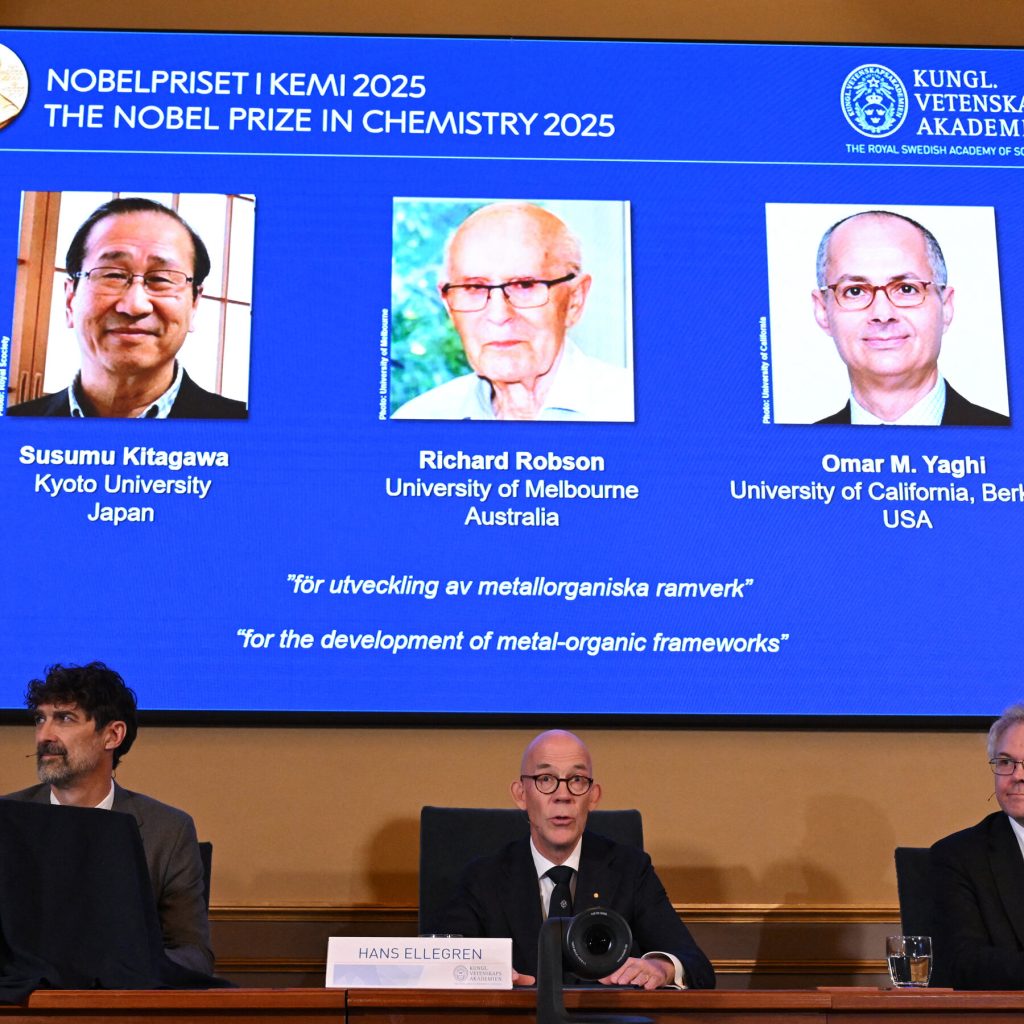
In a significant recognition of innovative chemistry, the Nobel Prize in Chemistry for this year has been awarded to three distinguished scientists: Susumu Kitagawa, Richard Robson, and Omar Yaghi. The prestigious honor was announced on Wednesday, highlighting their pivotal contributions to the development of a new molecular architecture that has opened up novel avenues in the field of chemistry.
The laureates were commended for their work on the design and synthesis of molecular frameworks known as metal-organic frameworks (MOFs) and covalent organic frameworks (COFs). These structures are notable for their highly porous nature, allowing them to selectively adsorb and separate molecules based on their size and shape. This property makes MOFs and COFs exceptionally valuable for a wide range of applications, from gas storage and separation to catalysis and drug delivery.
Susumu Kitagawa, a renowned chemist from Japan, has been at the forefront of research into the properties and applications of MOFs and COFs. His work has significantly advanced the understanding of how these materials can be engineered for specific uses. Richard Robson, from the United Kingdom, has made critical contributions to the structural aspects of these frameworks, elucidating their crystalline structures and how they interact with guest molecules. Omar Yaghi, originally from Jordan and now a prominent figure in the United States, has been instrumental in pioneering the field of MOFs, demonstrating their potential in various technological applications.
The development of MOFs and COFs represents a paradigm shift in materials science and chemistry, offering unprecedented control over the structure and function of materials at the molecular level. The work of Kitagawa, Robson, and Yaghi has not only expanded the toolbox available to chemists but also holds promise for addressing some of the world’s most pressing challenges, including energy storage, environmental remediation, and the development of more efficient industrial processes.
The Nobel Prize in Chemistry is one of the most esteemed awards in the scientific community, recognizing outstanding contributions that have advanced our understanding of chemistry and its applications. The awarding of this year’s prize to Susumu Kitagawa, Richard Robson, and Omar Yaghi underscores the significance of their achievements and highlights the exciting frontier of research into molecular architectures. Their work serves as a testament to the power of interdisciplinary research and collaboration in driving innovation and solving complex problems.






Bu yılki Nobel Kimya Ödülü’nü kazanan bilim adamlarını tebrik ediyorum. Moleküler mimari alanındaki çalışmaları gerçekten çığır açıcı. Bu keşiflerin gelecekte enerji depolama ve çevre sorunları gibi konularda çözüm bulunmasına yardımcı olacağını umuyorum.
Nobel Kimya Ödülü’nü kazanan Susumu Kitagawa, Richard Robson ve Omar Yaghi’nin çalışmaları gerçekten takdire şayan. Metal-organik çerçeve ve kovalent organik çerçeve gibi malzemelerin keşfi, kimya alanında yeni ufuklar açmış durumda.
Bu ödül, kimya alanında çalışan bilim adamlarının ne kadar önemli bir rol oynadığını gösteriyor. Moleküler mimari alanındaki keşifler, gelecekte birçok sorunun çözülmesine yardımcı olabilir. Tebrikler!
Nobel Kimya Ödülü’nü kazanan bilim adamlarının çalışmaları, malzemelerin moleküler düzeyde tasarlanması ve sentezlenmesine ilişkin yeni olanakları ortaya koyuyor. Bu keşiflerin endüstriyel uygulamalarda ve çevre sorunlarının çözümünde önemli rol oynayacağını düşünüyorum.
Kimya alanında yapılan bu tür çalışmalar, bilimin ilerlemesine ve toplumun gelişmesine büyük katkı sağlıyor. Nobel Kimya Ödülü’nü kazanan bilim adamlarını kutluyorum.
Moleküler mimari alanındaki bu keşifler, malzemelerin özelliklerini kontrol etme ve yeni uygulamalar geliştirme konusunda büyük potansiyel gösteriyor. Bu ödül, kimya alanındaki inovatif çalışmaların önemini bir kez daha vurguluyor.
Nobel Kimya Ödülü’nü kazanan Susumu Kitagawa, Richard Robson ve Omar Yaghi’nin çalışmaları, kimya alanında yeni bir çağın başlamasını sağlayacak. Bu keşiflerin gelecekte birçok alanda olumlu etkileri olacağını düşünüyorum.