Aydın,
1°C
açık

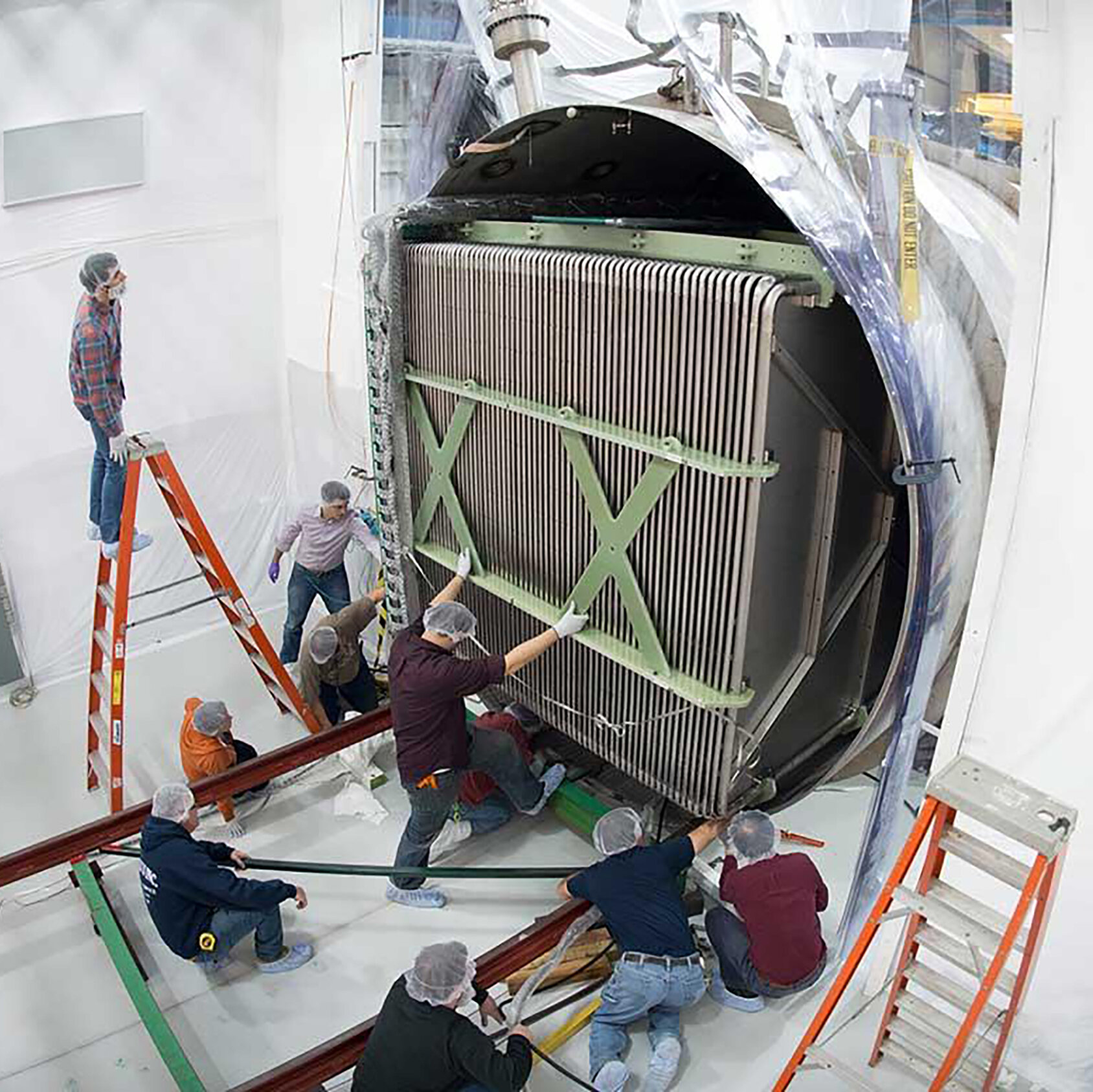
Recent theoretical work has long suggested that sterile neutrinos—hypothetical particles that interact only via gravity—could explain several lingering puzzles in modern physics, including the nature of dark matter and the anomalous results from neutrino oscillation experiments.
In a pair of papers released this week, researchers present fresh analyses that challenge the viability of sterile neutrinos as a solution to these mysteries. By re‑examining data from multiple neutrino detectors and cosmological observations, the authors argue that the signatures previously attributed to sterile neutrinos are more plausibly explained by systematic uncertainties and alternative physics scenarios.
One study focuses on short‑baseline neutrino experiments, where earlier anomalies hinted at the presence of an extra, “sterile” flavor. The authors demonstrate that when updated background models and detector calibrations are applied, the statistical significance of the anomalies drops below the threshold needed to claim a discovery.
The second paper turns to cosmology, scrutinizing the impact of sterile neutrinos on the cosmic microwave background and large‑scale structure formation. Their analysis shows that the addition of a sterile neutrino species would disrupt the precise agreement between observed and predicted cosmological parameters, unless the particle’s properties are tuned to unrealistic values.
If sterile neutrinos are indeed absent, scientists will need to look elsewhere for candidates that could make up the Universe’s dark matter. The findings also underscore the importance of rigorous data treatment and cross‑checking results across different experimental platforms.
Despite the setbacks, the quest to uncover the true nature of dark matter and neutrino physics continues. Upcoming experiments such as the Deep Underground Neutrino Experiment (DUNE) and the next generation of cosmological surveys promise higher precision measurements that could either revive the sterile neutrino hypothesis under new conditions or definitively close the chapter on this intriguing possibility.