Aydın,
-4°C
açık

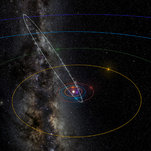
The Ursid meteor shower reaches its peak this weekend, coinciding with the winter solstice on December 21. The best viewing window runs from the early hours of Saturday through the pre‑dawn sky of Sunday, when the Earth’s shadow brushes the cometary debris left behind by comet 8P/Tuttle.
The radiant of the Ursids lies near the constellation Ursa Minor, close to the North Star (Polaris). To maximize your chances, face north and look slightly east of the radiant; meteors often appear to radiate outward from that point.
Dark skies are essential. Seek a location far from city lights—rural fields, mountain ridges, or any open area with a clear view of the northern horizon works best. The moon will be a thin crescent, setting early in the evening, so its light won’t interfere with the display.
Ursid meteors are typically fast and bright, streaking across the sky at speeds of up to 71 km/s. While the shower is modest compared to the Perseids or Geminids, you can still expect 5–10 meteors per hour under optimal conditions, with occasional fireballs that can outshine Venus.
If you’re into astrophotography, a wide‑angle lens on a sturdy tripod can record the meteor trails. Set a high ISO (800–1600), a moderate aperture (f/2.8–f/4), and expose for 20‑30 seconds per frame. Stacking multiple exposures later will reveal the full path of the Ursids.
Although not as prolific as other showers, the Ursids are a reminder of Earth’s ongoing dance with cometary debris. Watching them on the longest night of the year adds a poetic touch—tiny sparks against the backdrop of the darkest sky.