Aydın,
-4°C
açık

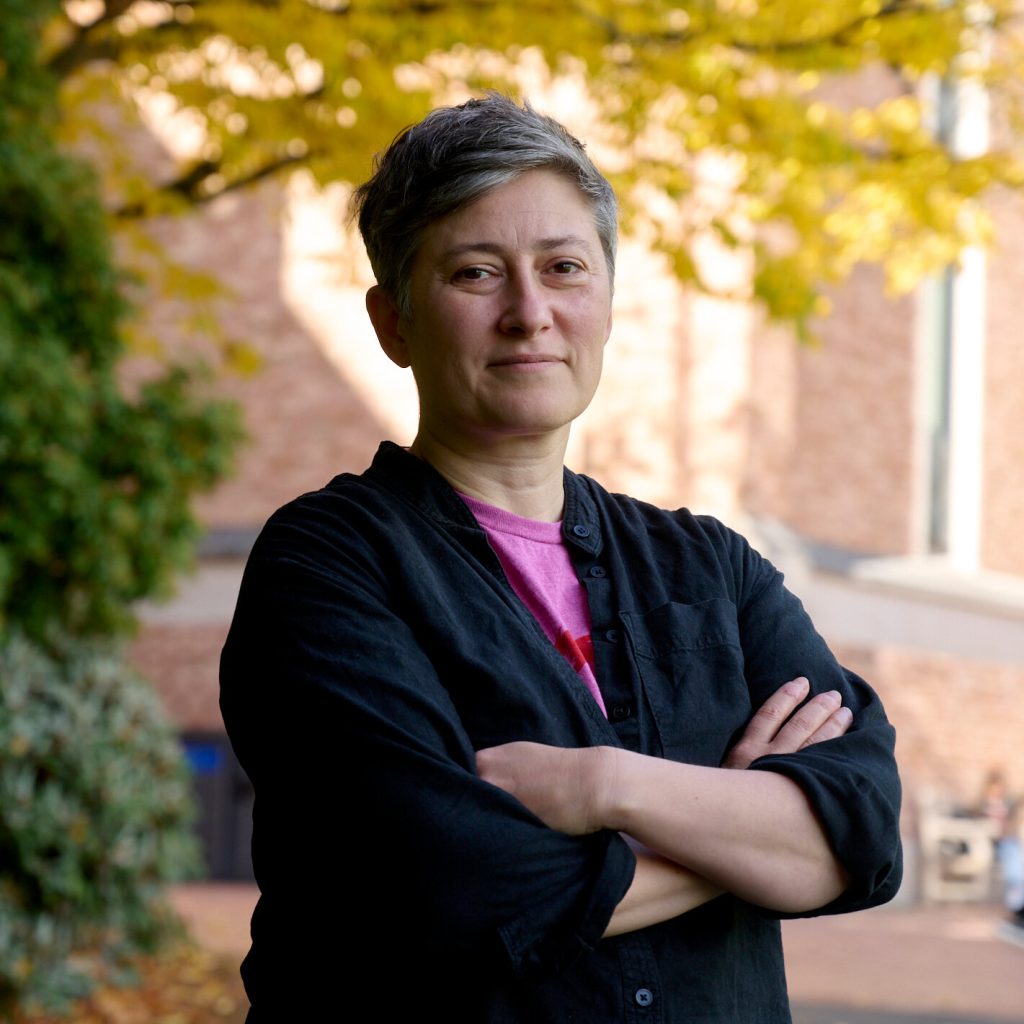
The pursuit of a truly representative democracy is a complex and multifaceted challenge, and one of the most significant obstacles is gerrymandering. This is a issue that Moon Duchin, a mathematician and professor at Tufts University, has dedicated considerable research to. Duchin’s work focuses on the mathematical underpinnings of gerrymandering, and how it can be addressed through a combination of mathematical modeling, computational algorithms, and a deeper understanding of the democratic process.
At its core, gerrymandering is the practice of manipulating electoral district boundaries for partisan gain. By carefully drawing the lines that define a district, politicians can influence the outcome of elections and secure a disproportionate number of seats for their party. This can lead to a situation where the party in power maintains control, even if they do not have the support of the majority of voters.
Duchin’s research has shown that gerrymandering is a problem that is deeply rooted in mathematics. The process of drawing district boundaries involves a complex set of geometric and topological constraints, as well as a multitude of possible solutions. This complexity makes it difficult to determine whether a given set of district boundaries is fair or not.
One of the key challenges in addressing gerrymandering is the fact that there is no clear definition of what constitutes a “fair” district. Different criteria, such as compactness, contiguity, and competitiveness, can be used to evaluate the fairness of a district, but these criteria often conflict with one another.
Duchin’s work involves the development of mathematical models and algorithms that can be used to analyze and evaluate different districting plans. These models take into account a range of factors, including the geographic distribution of voters, the partisan affiliation of voters, and the geometric properties of the district boundaries.
By using these models, Duchin and her colleagues have been able to identify a number of key insights into the nature of gerrymandering. For example, they have shown that the use of certain types of algorithms can lead to districts that are highly biased towards one party or the other. They have also demonstrated that the way in which district boundaries are drawn can have a significant impact on the representation of minority groups.
Ultimately, Duchin’s research aims to provide a more nuanced understanding of the complex mathematical issues underlying gerrymandering. By shedding light on these issues, she hopes to inform the development of more effective and fairer districting processes, and to promote a more representative and equitable democracy.