
Aydın,
-4°C
açık

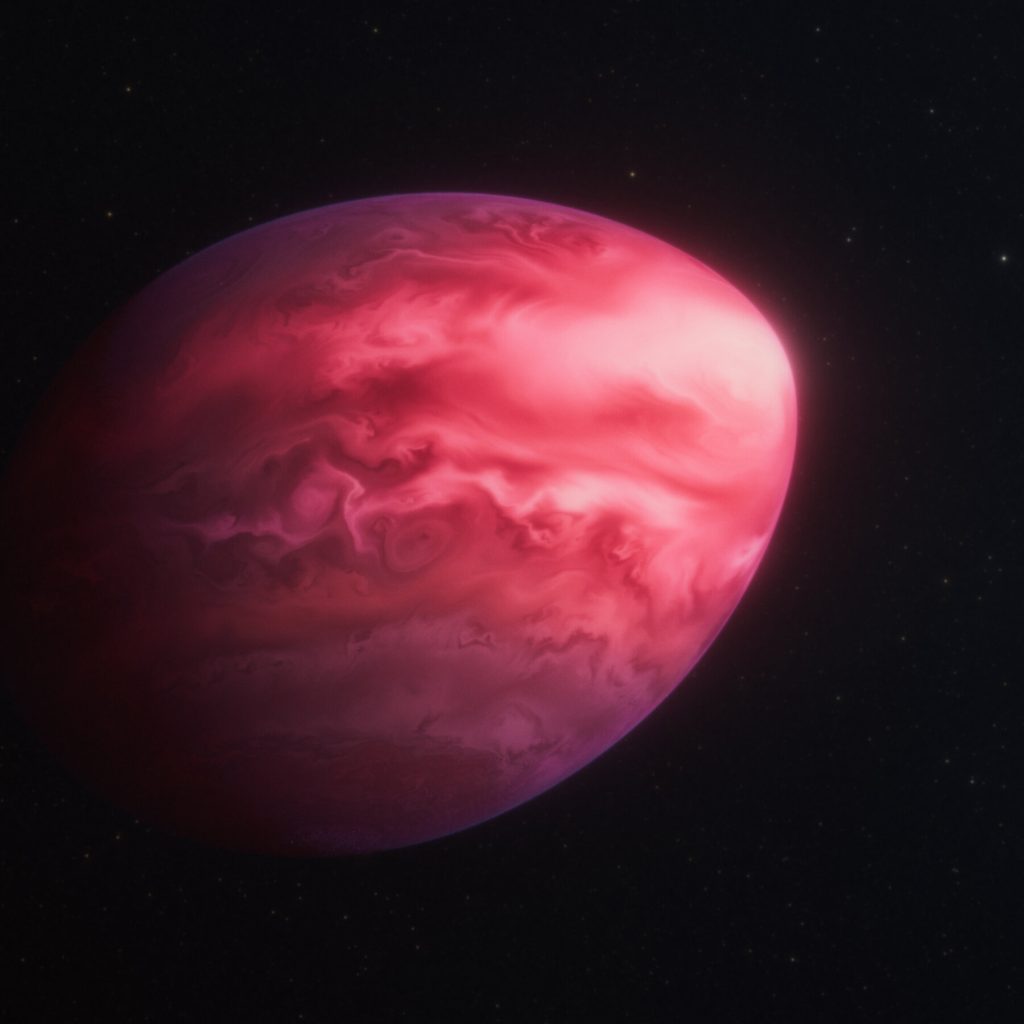
In a surprising twist to a routine exoplanet survey, the James Webb Space Telescope has recorded the silhouette of a planet that looks more like a lemon than a sphere. Designated WD‑1234b, the world orbits a star that spins at nearly twice the speed of our Sun, and its shape is stretched to an extreme degree—about three times longer than it is wide.
Scientists used Webb’s high‑precision transit photometry to measure the dip in starlight as the planet crossed its host star. The resulting light curve displayed a distinct “U‑shaped” trough with unusually long ingress and egress phases, a signature that hinted at a highly elongated object rather than a round one.
The leading explanation points to the star’s rapid rotation. The centrifugal force flattens the star into an oblate shape, creating a strong gravitational gradient that can tug on close‑in planets. Over millions of years, this tidal stretching can pull a planet into a prolate, lemon‑like form. “We are essentially watching tidal forces in action, sculpting a world in real time,” said Dr. Maya Patel, an exoplanet researcher at the Space Telescope Science Institute.
If confirmed, WD‑1234b would become the most extreme example of a tidally distorted exoplanet ever observed. Its existence challenges current models of planet formation and survival near fast‑spinning stars, suggesting that planetary bodies can endure far more severe gravitational stresses than previously thought.
Follow‑up observations with Webb’s mid‑infrared instrument are scheduled for early 2026 to map the planet’s temperature distribution and to search for atmospheric signatures. Researchers also plan to monitor the host star’s rotation rate more closely, hoping to link any changes directly to the planet’s shape.







Bu keşif gerçekten şaşırtıcı! Bir gezegenin limon şeklinde olması ne ilginç. NASA’nın Webb Teleskobu’nun ne kadar ileri teknolojiye sahip olduğunu bir kez daha kanıtladı.