Aydın,
6°C
açık

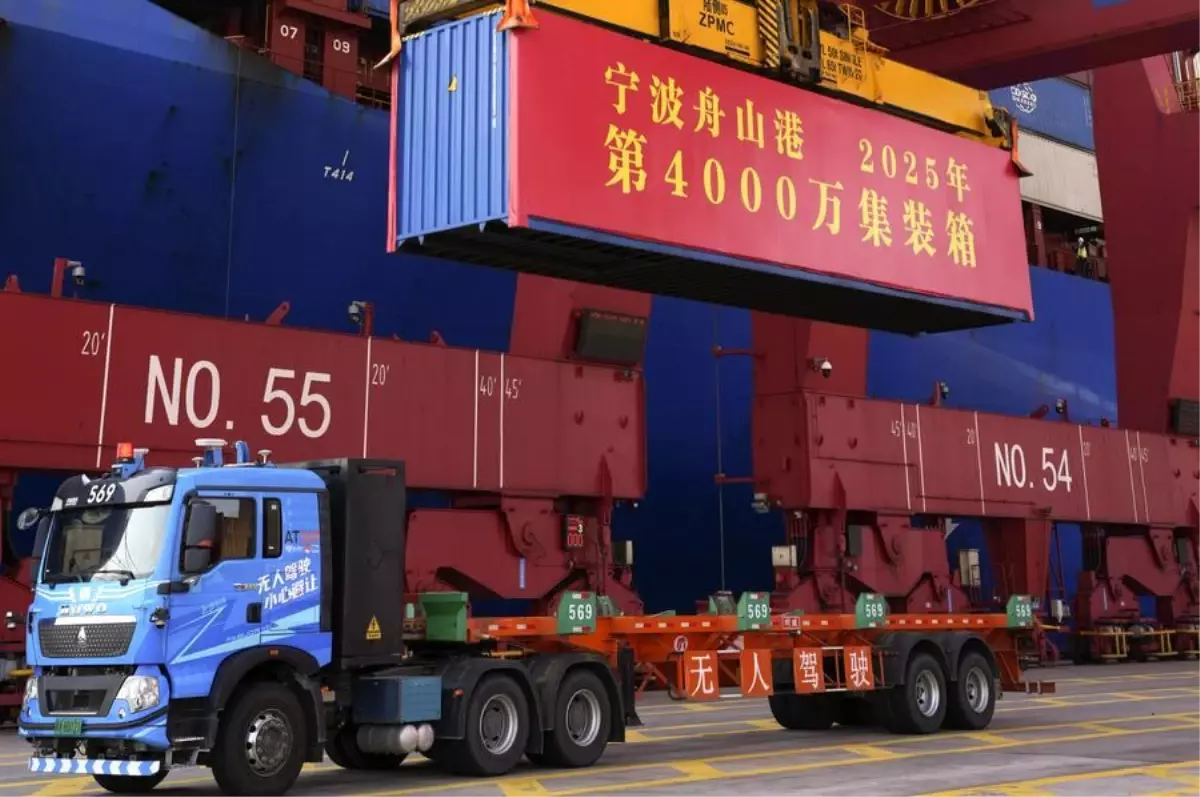
China’s eastern coast, Zhejiang province, is home to the Ningbo‑Zhoushan Port, which has now **surpassed the 40 million TEU mark** for the first time in its history. This milestone not only underscores the port’s rapid growth but also **solidifies its position as the world’s busiest container hub**.
The achievement was announced by the Zhejiang Seaport Group, noting that the port has **maintained its global leadership for 16 consecutive years** in terms of annual cargo volume. Despite starting container operations later than many of its regional rivals, Ningbo‑Zhoushan’s **growth trajectory has been extraordinary**.
Growth Timeline:
– Seven years ago*: 10 million TEU
– Four years later*: 20 million TEU
– Six years after that*: 30 million TEU
– In just four years*: 40 million TEU
The exponential increase reflects a combination of **strategic infrastructure investments**, the adoption of **advanced digital logistics platforms**, and a **surge in demand for Chinese exports** across global supply chains.
Industry analysts point out that the port’s success is closely linked to China’s **“Belt and Road” initiative**, which has boosted maritime trade routes connecting Asia, Europe, and Africa. Moreover, the **integration of AI‑driven scheduling systems** has reduced turnaround times, allowing more vessels to dock and unload within tighter windows.
Local authorities also emphasize the **economic ripple effect**: the record throughput has generated thousands of jobs, spurred growth in related sectors such as shipbuilding and freight forwarding, and contributed significantly to Zhejiang’s GDP.
Looking ahead, the port plans to **expand its deep‑water berths** and further **digitalize cargo handling** to accommodate the projected **50 million TEU annual volume by 2030**. If these plans materialize, Ningbo‑Zhoushan could **reinforce its dominance** in the fiercely competitive global maritime network.
For shippers and manufacturers worldwide, the port’s performance serves as a **reassurance of reliable, high‑capacity logistics**, reinforcing China’s role as a pivotal node in international trade.