Aydın,
1°C
parçalı bulutlu

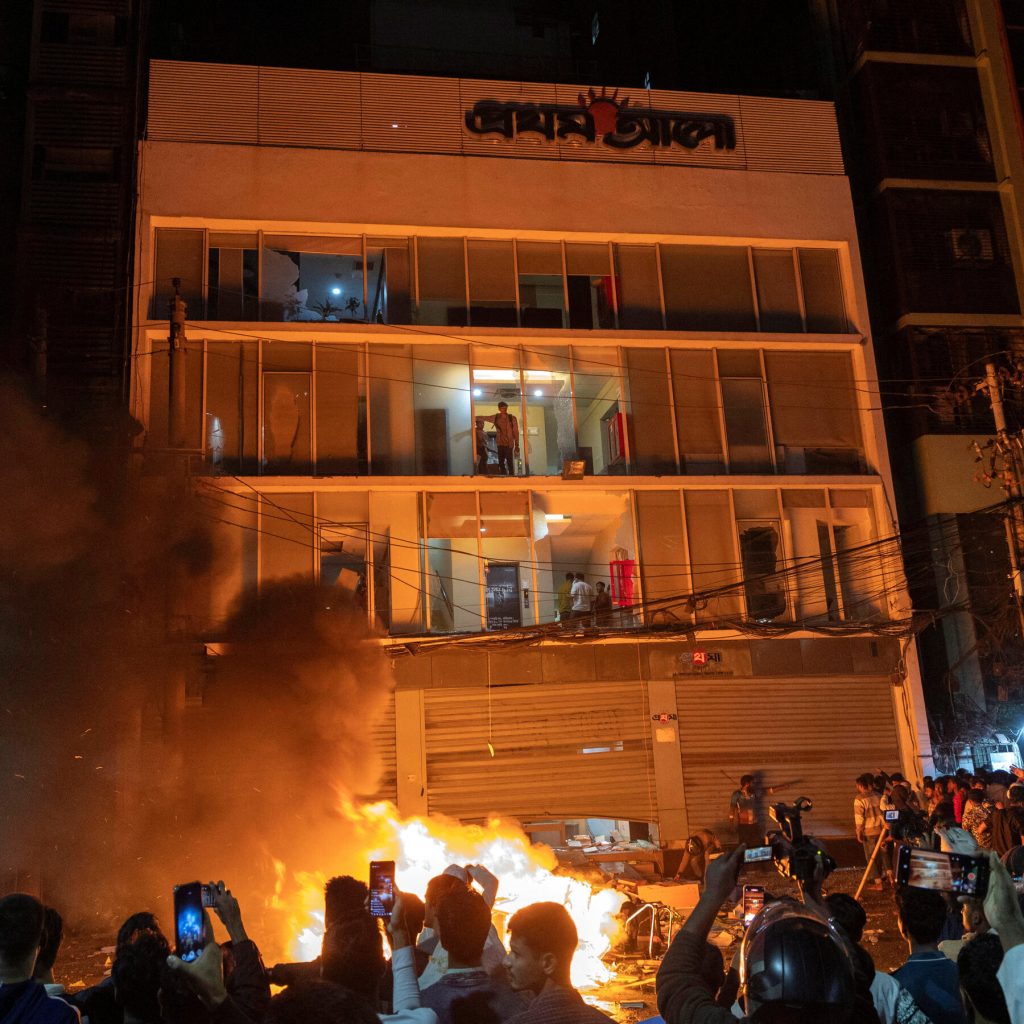
On Saturday night, streets in Dhaka and several other cities ignited with unrest after the fatal stabbing of Rashid Ahmed, a prominent student activist and leader of the Bangladesh Student Union. The attack, which occurred during a demonstration against alleged corruption, has triggered a wave of anger that quickly spilled onto the streets.
Within hours of the news spreading, crowds gathered outside the headquarters of major newspapers, including The Daily Gazette and Bangla Tribune. Protesters set fire to the buildings, hurling stones and shouting slogans that accused the press of bias and complicity in covering up the killing. Firefighters struggled to contain the blazes as the crowds clashed with police forces attempting to restore order.
Several senior politicians voiced grave concerns that the violence could jeopardize ongoing efforts to revive Bangladesh’s democratic institutions. Sheikh Anwar, a senior member of the ruling party, said, “We cannot allow a single tragedy to derail the long‑overdue transition toward a more open and accountable government.” Meanwhile, opposition leader Mahbubul Haque urged the authorities to launch an immediate, transparent investigation, warning that “any cover‑up will only fuel further bloodshed.”
Human‑rights groups and student organizations have called for nationwide strikes and peaceful demonstrations to demand justice for Rashid Ahmed. In a statement, the Bangladesh Human Rights Coalition emphasized the need for “prompt legal action against the perpetrators and protection for journalists and activists who risk their lives every day.”
The government has announced a special investigative panel, but skeptics doubt its independence. As the nation watches, the coming days will determine whether Bangladesh can contain the unrest or slide further into a cycle of violence that threatens its fragile democratic reforms.