Aydın,
-4°C
açık

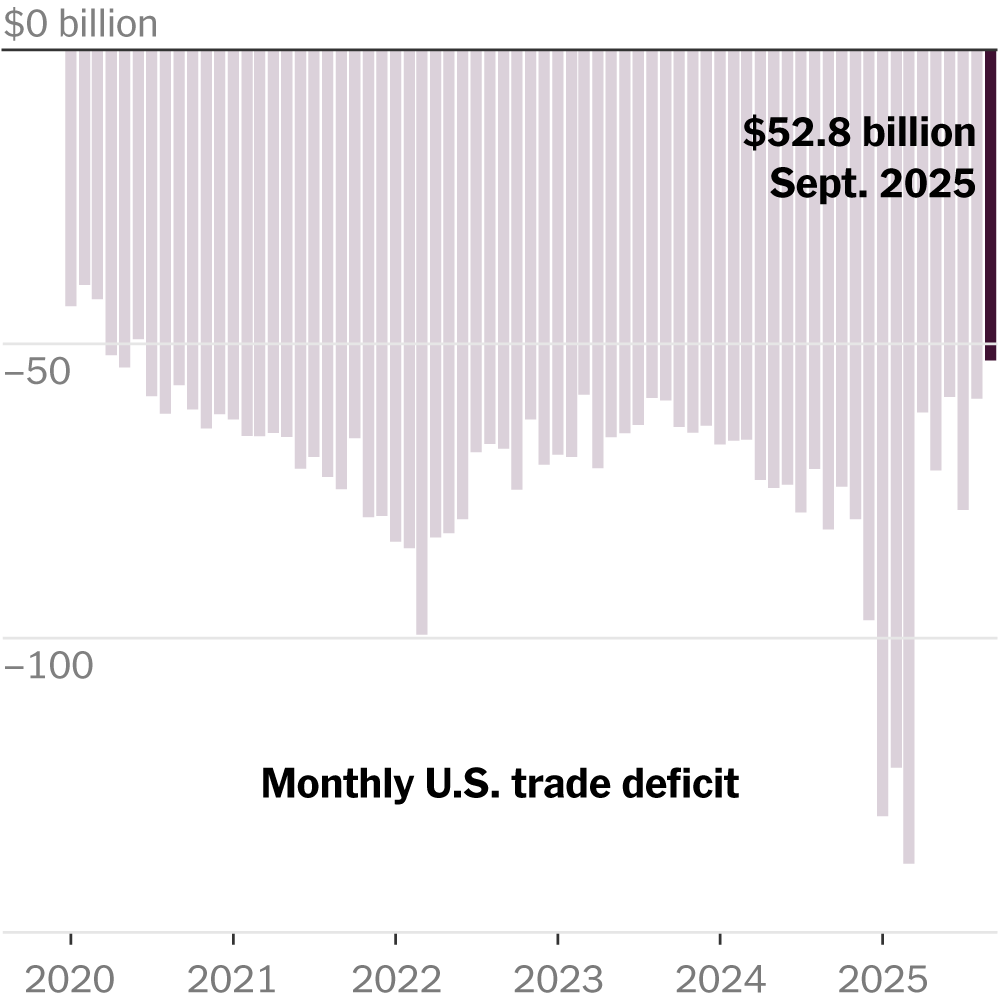
The United States posted a monthly trade deficit of $71.3 billion in September, the smallest gap between imports and exports recorded since 2018. The decline follows President Donald Trump’s sweeping tariff regime, which has reshaped the flow of goods across the nation’s borders.
Since the administration rolled out tariffs on more than $300 billion worth of imports from China, the European Union, Canada, and several other trading partners, imports have contracted sharply. In September, total imports fell by 4.5 % compared with the same month a year earlier, while exports rose modestly by 1.2 %. The combined effect nudged the trade balance back toward surplus territory in several key categories, most notably machinery, electronics, and automotive parts.
Among the hardest‑hit sectors were:
Economists caution that the September figures may be a temporary blip. “The tariff‑induced contraction in imports is real, but it also raises the risk of supply‑chain disruptions and higher consumer prices,” said Maria Lopez, senior analyst at the Brookings Institute. “If global partners retaliate further, the deficit could rebound quickly.”
While the latest data suggest a positive short‑term impact of the tariff strategy, the long‑term outlook remains ambiguous. Ongoing trade negotiations, potential changes in tariff policy, and shifting global demand will all play a role in determining whether the United States can sustain a lower trade deficit beyond the current reporting period.